
#129: Pictures in Space
30 years ago, on April 24th 1990, the Hubble Space Telescope was launched aboard the Space Shuttle Discovery.
With a diameter of only about 2.4m, it was not an especially large telescope, not even for its time. But what made it unique was something that Hubble was missing: An atmosphere. Earth-based telescopes can only observe the light that our atmosphere lets through, so no ultraviolet or infrared; it also warps the light due to differences in temperatures between the layers of air. And, of course, there’s the weather. Clouds will prevent any telescope from making an observation, no matter its diameter.
Hubble doesn’t have to deal with any of that. Instead, it had a different problem — a warped mirror that prevented it from taking good pictures1. It took NASA three years and a complicated, 11-day long servicing mission to put Hubble into working shape. Luckily, what followed was a success story: In the years that followed, Hubble allowed astronomers to revolutionize our understanding of the universe, probably best exemplified by the Hubble Deep Field.
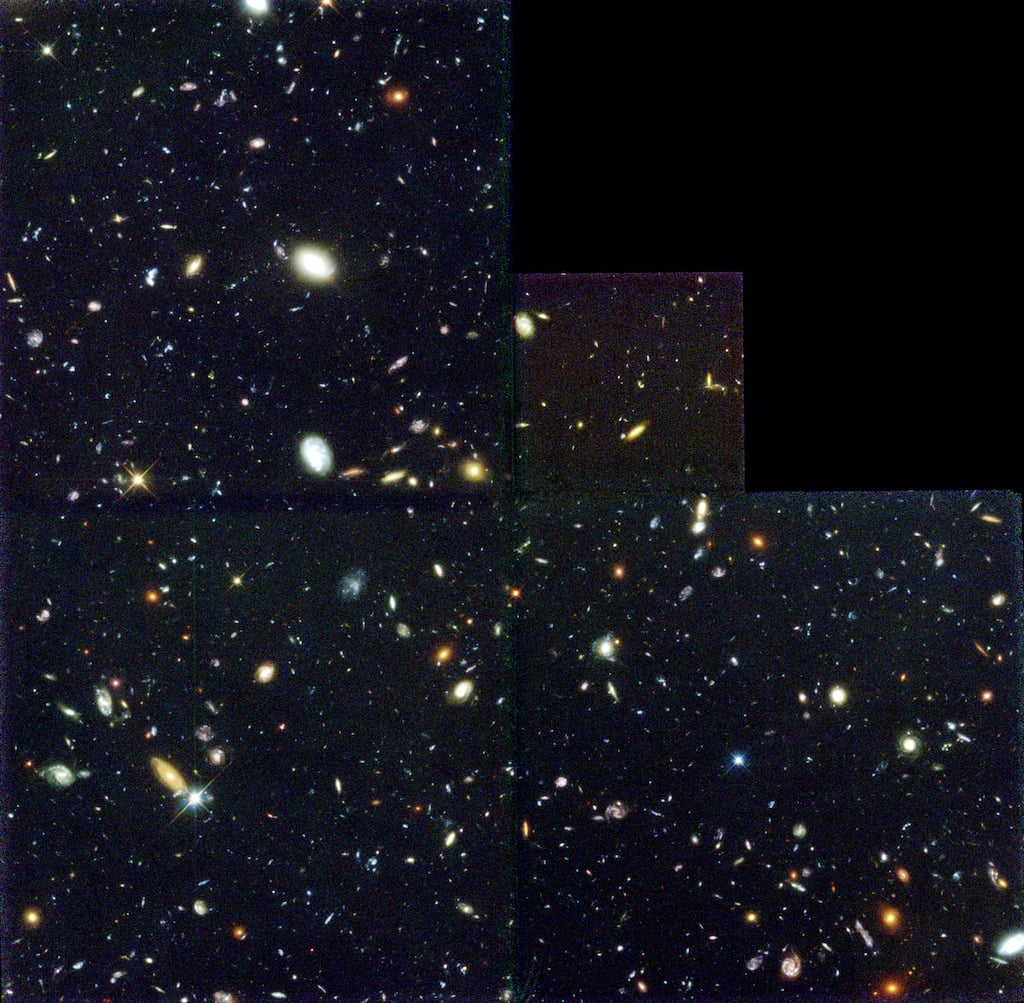
(Source: hubblesite.org)
It’s an iconic image, that came about because some astronomers thought it might be interesting to point Hubble at a patch of sky that was thought to be empty. As it turned out, it was anything but: Hubble revealed that “empty” patch contained thousands of previously unseen galaxies.
But that’s far from it: Bad Astronomy’s Phil Plait on the cosmic beauty and terror that mark the 30th anniversary of Hubble Space Telescope.
Computers in Space
Space is not a nice place to be, even for electronics. The vacuum poses unique heat dissipation problems, and there’s no atmosphere to protect them from high-energy radiation, the kind that can flip bits in computer memory. So it’s not like you can buy an off-the-shelf computer, stick it into a spacecraft, and send it up. What you need is a Space-grade CPU.
Nobody Move
COVID-19 has forced many changes and restrictions on us. A lot of these have unintended, but scientifically interesting side effects. Like the fact that everyone staying at home and not moving about have changed the way Earth moves.
Box Office Bomb
It’s tempting to compare the COVID-19 pandemic to a disaster movie. At least the stakes are right: A global threat that cannot be defeated by one country alone. But everything else about it would make for an implausible Covid-19 movie.
No Honor for Being Prepared
It is customary to honor the people who risk their lives when a catastrophe happens. The medics, doctors, firemen, and other helpers do deserve to have their effort praised. But if someone prevents a catastrophe from happening in the first place, nobody will recognize or even praise their efforts. Worse, their actions might even look like an overreaction: The Paradox of Preparation.
Last Refuge
Today, Wikipedia is an indispensable resource, and proof that a large number of people can work together to build something that no company could. But when Wikipedia launched in 2007, it was a laughing stock, a website with an overly ambitious goal that could go nowhere but failure. Wired on how Wikipedia became the last, best place on the Internet.
Naked Privacy
It’s a common refrain: If you don’t do anything wrong, you have nothing to hide, and so you don’t really need privacy. Privacy is only for those who have something to hide. This line of reasoning sounds appealing because it is so simple, and of course you haven’t done anything wrong, so what would you have to fear? Paul Jarvis explains why this is an uninformed and even dangerous opinion to have.
📖 Weekly Longread 📚
“Wuhan-based virologist Shi Zhengli has identified dozens of deadly SARS-like viruses in bat caves, and she warns there are more out there:” How China’s “Bat Woman” Hunted Down Viruses from SARS to the New Coronavirus
🦄 Unicorn Chaser 🦄
Photo of a single atom wins science photo contest
-
Although the warping was tiny by human standards: The outer edge of the mirror was 2200 nanometers (that’s 0.0022mm) too flat on the outer perimeter. ↩